Reliable Hospital Equipment Supplier for Healthcare Facilities

Hospital Equipment Supplier: Supporting Modern Healthcare Facilities
Choosing the right Hospital Equipment Supplier is an important decision for hospitals, clinics, diagnostic centers, laboratories, and other healthcare facilities. The right medical equipment plays a vital role in diagnosis, treatment, patient monitoring, and smooth day-to-day clinical operations.
UM Healthcare India Pvt Ltd provides medical equipment solutions tailored to the specific clinical and operational needs of healthcare organizations.
A reliable Hospital Equipment Supplier can make the entire procurement process easier by helping healthcare facilities choose the right products, understand technical specifications, manage delivery, and access dependable technical and after-sales support.
Why Choosing the Right Hospital Equipment Supplier Matters
Healthcare institutions require equipment that operates with certainty. A faulty monitoring system, lab equipment, surgery equipment, beds, or critical care equipment might interfere with operations and cause problems for patients.
The services of a reputable Hospital Equipment Supplier may assist in alleviating such concerns by offering the right products and services.
Purchase of medical equipment must be based on total cost of ownership and not simply on the acquisition cost. The total cost of ownership may involve acquisition, installation, training, maintenance, consumables, software support, spares, and eventual replacement of equipment.
Major Equipment Categories Supplied to Hospitals
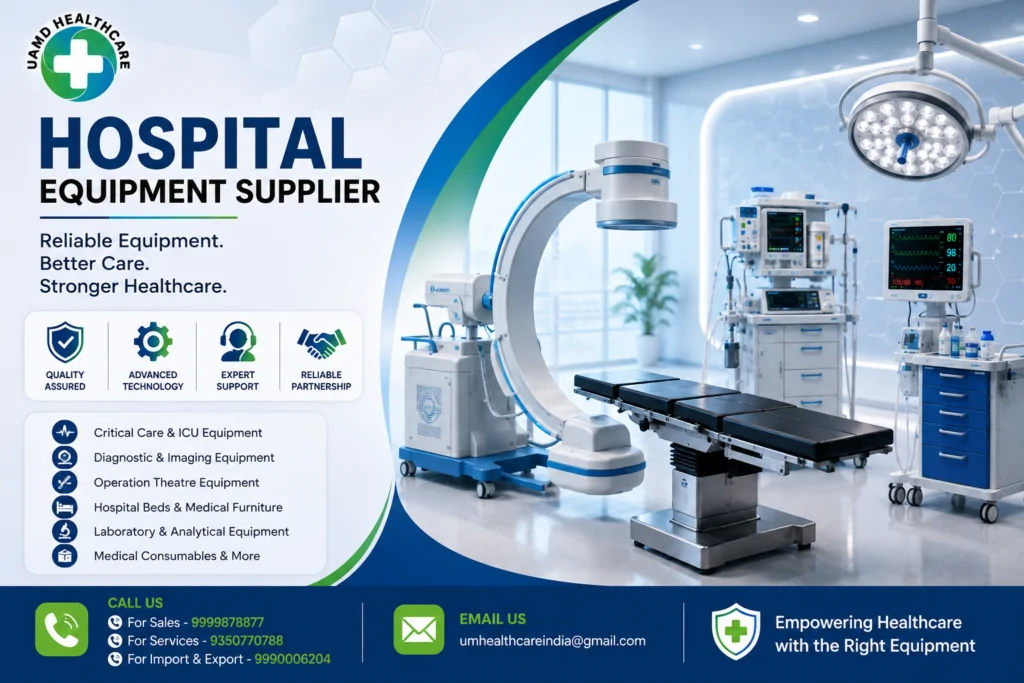
A comprehensive Hospital Equipment Supplier may support multiple departments and clinical applications. The exact portfolio varies by supplier, but common categories include critical care, diagnostics, operation theatre, laboratory equipment, hospital furniture, and medical consumables.
1. ICU and Critical Care Equipment
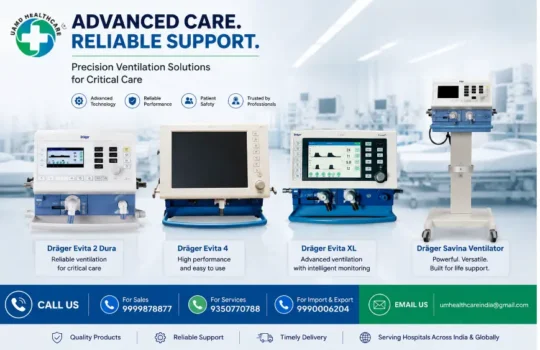
Intensive care units require reliable equipment for continuous patient monitoring and support. Hospitals may require patient monitors, ventilators, infusion systems, suction equipment, ICU beds, defibrillators, and related accessories.
The supplier should understand the clinical environment and ensure that equipment specifications are appropriate for the intended application.
2. Diagnostic Equipment
Diagnostic technology plays a vital role in identifying medical conditions and supporting treatment decisions. Depending on the facility, diagnostic equipment can include ECG systems, ultrasound equipment, imaging systems, laboratory analyzers, and monitoring devices.
When selecting diagnostic equipment, buyers should evaluate performance, compatibility, workflow requirements, training needs, maintenance requirements, and available technical support.
3. Operation Theatre Equipment
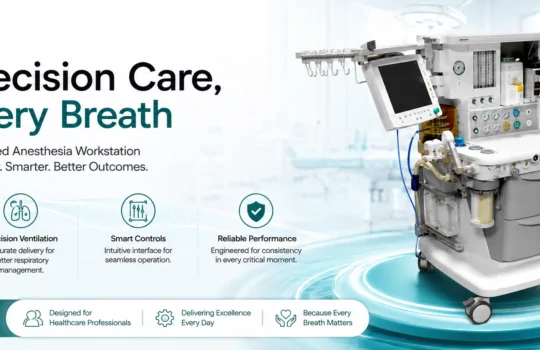
Operation theatres require carefully selected equipment designed for procedural environments. Hospitals may purchase operating tables, surgical lights, electrosurgical units, surgical instruments, anesthesia-related equipment, patient monitors, and other theatre accessories.
A capable Hospital Equipment Supplier should understand how individual products fit into the wider operating-room workflow.
4. Hospital Beds and Medical Furniture
Patient-care environments also require durable furniture. Hospital beds, examination tables, bedside cabinets, stretchers, trolleys, chairs, and other furniture can contribute to patient comfort and staff efficiency.
Buyers should consider factors such as construction quality, ease of cleaning, adjustability, mobility, ergonomics, and intended clinical use.
5. Laboratory Equipment
Laboratories depend on equipment that supports accurate and efficient testing. Depending on the laboratory’s specialization, products may include analyzers, centrifuges, microscopes, refrigerators, incubators, pipettes, and other laboratory systems.
Procurement teams should evaluate equipment capacity, compatibility with laboratory workflows, service availability, consumables, and technical requirements.
What to Look for in a Hospital Equipment Supplier
Selecting a supplier requires more than comparing quotations. Healthcare organizations should assess several important factors.
Product Quality and Documentation
A reputable Hospital Equipment Supplier should provide clear product information and appropriate documentation. Healthcare buyers should verify applicable regulatory requirements, certifications, warranties, technical specifications, and manufacturer information before purchasing.
Requirements vary by country, product category, and healthcare application, so buyers should confirm applicable local regulations before placing an order.
Technical Expertise
Medical equipment can involve installation, calibration, configuration, integration, and user training. Technical knowledge is therefore an important part of supplier evaluation.
A supplier with qualified technical personnel can help healthcare facilities address installation requirements and operational questions more effectively.
Installation and Training
Equipment delivery is only one stage of procurement. Installation and commissioning can be equally important, particularly for sophisticated systems.
User training can help clinical staff understand equipment operation, routine procedures, and appropriate use. Procurement guidance commonly identifies installation and training as important parts of successful medical equipment implementation.
Maintenance and After-Sales Service
Healthcare equipment may require preventive maintenance, repairs, replacement parts, calibration, software support, or technical assistance. A strong Hospital Equipment Supplier should clearly explain warranty coverage, service arrangements, response procedures, and spare-parts availability.
Reliable after-sales service can help minimize downtime and extend equipment usability.

How to Evaluate Supplier Pricing
Price is an important procurement consideration, but it should not be the only factor. A low purchase price may not represent the lowest overall cost if the equipment requires frequent repairs, expensive consumables, limited technical support, or early replacement.
Healthcare organizations should compare the total cost of ownership and assess the supplier’s service capability. A procurement scoring model can consider technical performance, lifecycle cost, service reputation, and supplier stability alongside price.
A useful comparison should include:
- Initial equipment price
- Installation costs
- Training costs
- Warranty coverage
- Preventive maintenance
- Spare-parts availability
- Consumable requirements
- Software or service costs
- Expected operating life
- Technical support
This approach helps procurement teams select equipment based on long-term value.
Benefits of Working With an Experienced Hospital Equipment Supplier
A seasoned Hospital Equipment Supplier can serve as a procurement partner rather than a mere distributor of the goods.
For one thing, there is product expertise. The supplier can guide buyers as far as the specifications go and provide products that will meet the clinical needs.
The second benefit is that procurement will be simplified. Rather than dealing with multiple vendors for different categories of items, the hospital can make its purchases from the supplier whose line is more diverse.
Technical assistance is an essential benefit as well. It can range from installation to maintenance and help minimize equipment downtime and ensure the continuity of operations.
Moreover, it will be helpful for the hospitals that are in the process of expanding, renovating, and creating a new department. Equipment selection can be carried out in conjunction with space allocation, power supply, staffing, etc.
Creating a Better Hospital Equipment Procurement Strategy
Equipment procurement at healthcare institutions can be enhanced through structured planning.
First, there must be identification of the need. It is important to know the department using the equipment, frequency of use, and critical features.
Second, there must be definition of technical specifications. The need should guide requirements and not the choice of specific brand before analysis.
Third, evaluate different vendors. Product quality, technical know-how, certification, warranty, delivery time, maintenance, and references can be considered.
Fourth, cost ownership can be established. Consider costs that may be incurred even after installing the equipment.
Fifth, prepare for installation and training. It is important to identify the installer, test operation of the equipment, training, and documentation.
Lastly, prepare for maintenance of equipment. Prevention of maintenance can go a long way in reducing equipment breakdowns.
The Future of Hospital Equipment Procurement
Healthcare technology continues to evolve, increasing the importance of strategic procurement. Hospitals are adopting more connected devices, advanced diagnostic systems, digital workflows, and technology-supported patient monitoring.
As healthcare facilities modernize, the role of the Hospital Equipment Supplier is also becoming broader. Suppliers increasingly need to provide consultation, technical support, training, maintenance, and lifecycle assistance rather than simply delivering equipment.
Hospitals can benefit from suppliers that understand both current requirements and future expansion plans. A long-term relationship can make it easier to maintain equipment, obtain spare parts, train new staff, and plan future upgrades.
Conclusion
Choosing the right Hospital Equipment Supplier is an important decision for hospitals, clinics, laboratories, diagnostic centers, and other healthcare organizations. Reliable medical equipment helps support everyday clinical workflows while contributing to effective diagnosis, treatment, patient care, and overall operational efficiency.
Before making a purchase, healthcare facilities should consider more than just the product itself. Factors such as equipment suitability, technical expertise, proper documentation, installation, staff training, warranty coverage, maintenance services, spare-parts availability, and the total cost of ownership all play an important role. A well-planned procurement process can help organizations make informed decisions and build stronger healthcare infrastructure.
UM Healthcare India Pvt Ltd is committed to supporting healthcare organizations with dependable medical equipment solutions and professional supplier support. Working with the right Hospital Equipment Supplier can make it easier to choose suitable equipment, ensure proper installation and implementation, maintain reliable performance, and plan for future requirements.
Taking a long-term approach to healthcare procurement can deliver greater value—not only for healthcare professionals and organizations, but ultimately for the patients they serve
Related Articles
Category
- Anesthesia Machine 3
- Bipap Machine 0
- Bubble Cpap 0
- Cautery Machine 0
- Defibrilator 4
- Ecg Machine 0
- Ecmo 2
- Endoscopy 0
- External Pacemaker 1
- Fetal Doppler/Ctg 0
- Harmonic Scalpal 2
- Heart Lung Machine 4
- Heater Cooler 4
- Hospital Projects 0
- Iabp Machine 2
- Infusion Pump 0
- Laparosocopy 0
- Maquet 1
- Medical Accessories 13
- Medical Batteries 0
- Patient Monitor 4
- Pressure Injector 0
- Pulse Oximeter 0
- Respiratory Consumables 2
- Surgical Instruments 0
- Syringe Pump 0
- Uncategorized 0
- Ventilator 9
- Ventilator Portable 0
- Vessel Sealer 0